Hey there, I’m Jake, and if you’ve ever stared at a dozen modern sofas online, wondering why one charges $800 and another $3,500 for basically the same “box with cushions,” you’re not alone. I’ve been in the modern sofa game for six years now—my small supply team works directly with factories that make sleek, space-saving pieces for apartments, townhomes, and even open-concept houses across the country—and let me tell you, there’s way more to a sofa’s price than how good it looks in a Pinterest reel. Let’s break down the real, behind-the-scenes factors that actually determine what you pay, straight from the people who source, build, and ship these things every day. Modern Sofa

First off, let’s talk materials—not just what the sofa is covered in, but the stuff you don’t see, because that’s where the biggest price gaps hide. I see this all the time: a $900 “mid-century modern” sofa next to a $2,200 one with the exact same silhouette, same style of tapered wooden legs, even similar-looking fabric. What’s the difference? The frame. Cheap sofas get made with particleboard or MDF nailed together, maybe even some recycled wood scraps glued and pressed thin. That stuff creaks after a year, splits if you lean too hard on the arm, and might even warp if it’s in a sunny room for too long. We only use solid kiln-dried hardwood for our frames—oak, ash, sometimes birch—and that’s non-negotiable. Kiln-dried wood is heated to kill bugs, stabilize it so it doesn’t shrink or swell, and it’s way stronger. A frame made right can last 15+ years, while a particleboard frame might start falling apart in 2. That alone adds a few hundred bucks to the cost, but it’s worth it for us, because I’ve had customers email us saying their sofa is 8 years old and still looks like new.
Next, the upholstery. This is obvious, but there’s a huge range in fabric quality, even within modern sofa materials. Let’s start with fabrics everyone uses: polyester, linen, leather, and microfiber, but not all of them are created equal. For example, polyester: cheap sofa polyester is thin, fades after 6 months of sunlight, pills like crazy when you rub it (looking at you, people with cats), and feels like scratchy plastic. We use solution-dyed polyester for our sofas—what that means is the color is mixed into the fiber before it’s spun, not sprayed on top. It doesn’t fade, it’s stain-resistant, and it feels soft, not crunchy. Linen is another big one for modern sofas—raw linen is lightweight, breathable, and has that cool, slubby look people love, but cheap linen shrinks 10% when you wash it (or even if you spill water on it!) and wrinkles like crazy. We get our linen from mills in Portugal, where they process it to have a bit more stretch, so it only shrinks 1-2% max, and it’s pre-treated to resist minor stains. Then there’s leather. The cheapest leather on sofas right now is “bonded leather”—that’s leftover leather scraps glued together, pressed flat, and coated to look like real leather. It peels after a year, smells weird, and feels nothing like real hide. We use full-grain or top-grain leather, depending on the line. Full-grain is the top layer of the hide, has natural imperfections (that’s part of the charm!), and ages like fine wine; top-grain is a little sanded to remove flaws, still way better than bonded leather. Even leather finishes matter: aniline leather, which is untreated, has a soft, natural feel but stains super easy, so we only use it for our higher-end modern sofas that are meant for homes where people don’t spill coffee every morning. The upholstery labor and materials here alone can add $1,000 to $1,500 to the price, versus a sofa with bonded polyester.
Then there’s the cushion core, which is probably the part people sit on every day and notice the most, but almost no one talks about. Cheap sofa cushions use “high-resilience” foam that’s actually low-density—think about a camping pillow, but firmer. It compresses after 6 months, so you sink right down to the frame, and you have to fluff the cushions every single night to keep them looking good. We use a mix of high-density foam and down-feather blend cushions for our sofas, with a core of 2.0+ density foam (that’s industry standard for durable seating) wrapped in a layer of feathers and fiber, so it’s soft but bounces back. Some of our luxury lines even use memory foam, but only if it’s CertiPUR-US certified—meaning no toxic chemicals, and it’s made to last. Wait, CertiPUR-US is a big one, by the way. A lot of cheap foam sofas have foam that’s full of formaldehyde and other yucky chemicals, off-gassing for weeks when you bring it home. We refuse to work with any factory that doesn’t use CertiPUR-US certified foam, even if it adds a bit to the cost, because I don’t want my niece sitting on a sofa that smells like chemicals when she visits. Cushion cores can make up 20% of the sofa’s total cost, and that’s not a line item you want to skimp on.
Next, craftsmanship and build quality, which is where a lot of “fast fashion” sofas cut corners. You know those sofas you order from Amazon that show up in a box, take 2 hours to assemble, and have arms that wobble if you push them? That’s cut corners in stitching, joinery, and detail work. For our sofas, every seam is double-stitched, every corner is reinforced with metal staples (not just glue), and the armrests are attached with heavy-duty bolts, not just staples. We also have a team of finishers that check every sofa before it leaves the factory—they feel for loose threads, check that the cushions line up perfectly, make sure the legs are straight, even test how the sofa opens if it’s a sectional or has a pull-out bed. A factory that does that level of quality control isn’t cheap to work with—they pay their seamstresses a living wage, have less waste from faulty sofas, and don’t rush production to make 100 sofas a day. Fast fashion sofa factories might make 500 a day, cutting every corner possible, but their sofas last 2 years. Ours are built to last 10+, so even if they cost a bit more upfront, you’re not replacing them every other year.
Then there’s size and customization, which is huge for modern sofas, since a lot of people need them for specific spaces. A standard 3-seater sofa is going to be cheaper than a custom sectional that’s 10 feet long with a chaise and a storage ottoman, right? But it’s not just length—designers and customers often ask for customizations like extra deep seats, removable covers for easy washing, adjustable backrests, or even built-in USB ports for charging phones. All of those add time and materials. Removable covers, for example, require extra zippers, stitching, and durable fabric that doesn’t fray when you take it on and off, so that’s a $200-$300 add-on. If a sofa is custom-sized, the factory has to adjust their whole production line, which means less efficiency, so that adds more cost. I’ve had customers come to us saying their living room is a weird shape, and they need a sofa that’s not a standard 7-foot or 8-foot size—we can do that, but it’s not the same as grabbing a pre-made sofa off the shelf, so that’s reflected in the price.
Wait, let’s not forget shipping and logistics, which people always overlook. Modern sofas are big, bulky, awkward to move, and they can get damaged easily. If you order a sofa from a factory in China, for example, you’re paying for international shipping, customs fees, import taxes, and then last-mile delivery to your door, plus the insurance if it gets damaged in transit. We work with factories in the U.S. and Italy, so we don’t have to pay those crazy international shipping costs, but even domestic shipping adds up. For a 3-seater sofa, shipping locally is around $150-$250, but if it’s going to a remote area or up a flight of stairs, that can go up to $500. Also, if a sofa has to go through multiple warehouses—like from factory to our office, then to a third-party delivery service—that adds handling fees, and each time it’s touched, there’s a risk of scratches or tears, so we have to factor in that cost too. A lot of budget sofas cut corners here by shipping unassembled, which means you have to build it yourself, and if you damage it during assembly, you’re on the hook for it. Our sofas come partially assembled, so the main frame is put together, you just attach the legs, which takes 10 minutes, not 2 hours. That adds to the shipping and labor cost, but it’s worth it for our customers.
Another big one is design and brand, but not in the way you might think. A lot of people assume a high brand name just marks up the price for a logo, and that’s true for some, but for modern sofas, good design takes work. Modern sofa design isn’t just making something look sleek—it’s making it functional for real life. For example, a sofa that looks good but has arms that are too wide and make the seat feel tiny, or cushions that are too soft and sag after a month. Good designers spend months testing prototypes, sitting on them, adjusting the angles of the backrest, making sure the legs are the right height to not scratch your floors, making sure the fabric doesn’t show every fingerprint. We work with in-house designers who live in the same cities our customers do, so they know what small apartments look like, what people actually want in a sofa (yes, storage is a big request!), and they don’t just copy trends—they make trends that work. That design time and research is factored into the price, and it’s why a sofa that’s “similar” to a competitor’s might cost a bit more, but it actually works the way it’s supposed to. Also, sustainable production is a design and brand factor that’s growing. A lot of customers care about where their sofa comes from, if the factory uses eco-friendly materials, if workers are paid fairly. We only work with factories that have GOTS certification for organic fabrics, use solar power in their factories, and pay their workers at least a living wage. That might add 10-15% to the sofa’s cost, but our customers tell us that’s worth it—they don’t want to bring a sofa into their home that was made by people working for pennies, or that’s bad for the environment.
Wait, let’s talk about the little extra add-ons that add up, too. Some sofas come with loose cushions versus sewn-in ones—loose cushions are easier to fluff, but they cost more. Some have reversible cushions, which means you can flip them over to wear evenly, that’s another cost. We even offer things like spill-proof treatments for fabric, which is a $100 add-on, or matching throw pillows that are made from the same fabric, so they don’t look cheap. I’ve had customers complain that their sofa seemed like a good deal at first, but then they added on the delivery, the protective cover, and the pillows, and it ended up being the same price as our mid-range sofa. It’s all those little things that get hidden in the fine print.
Now, I want to be real with you—there’s no “one size fits all” when it comes to sofa prices, and you don’t have to spend $3,000 to get a good, durable modern sofa. Our entry-level line starts around $800 for a 3-seater, and that’s solid kiln-dried hardwood, solution-dyed polyester, CertiPUR-US foam, and build quality that will last you 5+ years, maybe more. Our mid-range line is around $1,500-$2,000, which adds top-grain leather, linen upholstery, and custom size options, and that’s built to last 10 years+. Our luxury line is $2,500+, with full-grain leather, down-feather cushions, hand-finished details, and even built-in USB ports or storage. The key is knowing what you’re actually paying for, not just the sticker price. You don’t want to buy a $500 sofa that falls apart in a year, because you’ll end up spending $1,000 in the long run replacing it.
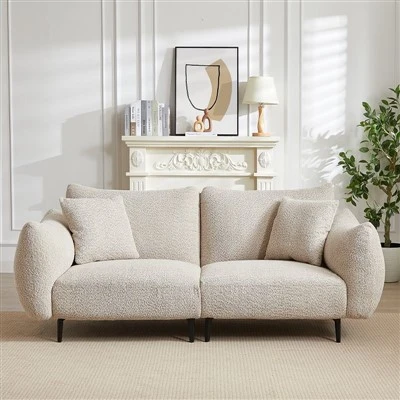
At the end of the day, I started in this business because I got tired of seeing people get ripped off by cheap sofas that look good but don’t work. We don’t do hidden fees, we don’t cut corners on materials, and we’re always here to talk about what matters for your space. If you’re in the market for a modern sofa, whether you’re furnishing a small apartment, a big family room, or just replacing an old one, feel free to reach out to our team to chat about options, ask questions, or get a custom quote. We’re not pushy salespeople—we just want you to get a sofa that you’ll love sitting on for years.
Booth Sofa References
- North American Furnishings Manufacturers Association. (2023). Sofa Construction Standards & Material Durability.
- Environmental Protection Agency. (2022). Volatile Organic Compounds in Upholstered Furniture.
- Textile Institute. (2021). Performance Metrics for Upholstery Fabrics.
- Sustainable Furnishings Council. (2023). Certified Materials & Labor Practices for Upholstered Seating.
Huizhou Ramson Technology Co., Ltd.
Huizhou Ramson Technology Co., Ltd. is one of the most professional modern sofa manufacturers and suppliers in China, also supports customized service with low price. Please feel free to wholesale bulk classy modern sofa from our factory. Contact us for pricelist.
Address: Building 3-4, Changlonggang Industrial Park, Tiantou Village, Shatian Town, Huiyang District, Huizhou City, Guangdong Province
E-mail: jscsofa@jsc-furniture.com
WebSite: https://www.jsc-sofa.com/
