Hey there, regulars and new folks in the steel game, let’s cut to the chase—if you’ve ever ordered HRPO steel, you’ve probably glanced at a fresh coil or sheet and thought, “Wait, that’s not just one color.” Spoiler: you’re not crazy, and I’m here to break down the color variations in HRPO steel like we’re chatting at a loading dock, not a stuffy conference room. I’m the guy who’s been running my small, family-owned HRPO shop for 12 years—no fancy corporate jargon, just what I’ve learned by troubleshooting coils at 5 a.m. and answering dumb questions from guys who thought “pickled” meant you marinated steel in vinegar (don’t even get me started). Hot Rolled Pickled & Oiled (HRPO)
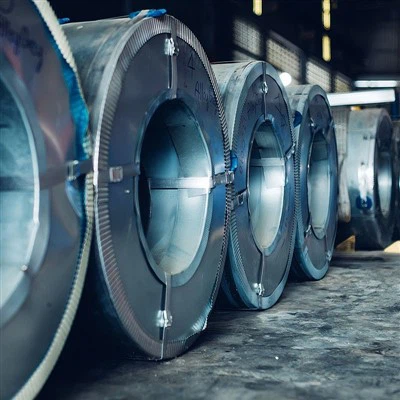
First, let’s make sure we’re all on the same page about what HRPO actually is, real quick. Hot Rolled Pickled & Oiled—basically, we take hot rolled steel, dunk it in a big acid bath (hydrochloric, usually) to strip that crumbly black scale off the surface, rinse it like crazy, then hit it with a thin layer of rust-inhibiting oil so it doesn’t flash-rust before you use it. The color isn’t random, by the way—every hue is a clue to what went right, or what went a little sideways, in our shop. That’s the fun part—this isn’t just eye candy, it’s intel for our customers.
Let’s start with the OG, the color we aim for 90% of the time: that uniform, medium silver-gray. If you’re a fabricator, you know this one. It’s like a well-worn hammer, metallic, consistent across the whole sheet, no streaks, no weird yellow tints. How do we get here? The acid bath is dialed in just right—temperature’s at 140°F, concentration sits around 10%, and the rinse water is fresh every 200 coils. Too weak an acid dip, and you leave scale; too strong, and you etch the steel too deep, messing with that perfect silver. The oil we use is a light, neutral rust inhibitor—nothing too thick, nothing too sticky. This is the sweet spot, the color that makes both my QC guy and the customer happy because it welds clean, paints evenly, and forms nicely. We see this on stuff like structural tubing, general fabrication parts, that random bracket your customer needed last minute. It’s not flashy, but it’s the bread and butter of HRPO color.
Next up, the silver-gray with a hint of blue—we call that “steel blue” in the shop, and it’s usually a good sign, not a problem. Wait, why blue? That’s a thin oxide layer that forms when the steel hits warm air right after pickling, before we get the oil on. Nothing to panic about—this still welds fine, paints well, just has a subtle, cool undertone instead of straight silver. We get this sometimes in the summer, when the shop’s 90°F and humidity is through the roof—pickling can cool the steel, but by the time it goes through the rinse line and to the oiler, a little oxidation kicks in before we coat it. I’ve had a customer ask me if it’s “finished” steel once, thinking it was a higher grade. Nope, just summer in my shop. It’s totally usable, just a different shade. Another time we get this blue tinge is if the acid bath has a tiny bit of iron contamination—like, less than 5%—but even that doesn’t mess with quality, just adds a faint blue hue. We always flag it in our packing slips so our guys don’t get surprised when they lay a sheet next to a straight silver one.
Now, the not-so-perfect colors, and these are the ones where we’ve got a small issue, not a dealbreaker—usually fixable with a tweak in the line. First, yellowish or straw-colored streaks. That’s usually residual acid, or not enough rinse water. If we don’t blast the steel with enough fresh water after the acid bath, leftover hydrochloric acid stays on the surface, and when it reacts with the oil, it turns that pale yellow. Bad news because it can eat through the oil and cause rust, or mess with paint adhesion if you’re coating it later. We catch this during QC, usually—our eye is trained to spot a yellow streak before the coil goes out. If it’s a small streak, we’ll just note it, but if it’s more than a few inches wide, we’ll run it back through the rinse line for an extra pass. Customers are usually cool with it as long as we tell them up front, and discount it a little for the extra touch-up. Last month, a guy who makes custom outdoor planters grabbed a coil with a faint yellow streak and said it was perfect—he was just gonna grind that edge anyway.
Then there’s the dark gray, almost charcoal color. That’s from leftover scale, plain and simple. If the acid bath is too weak, or the steel stays in the pickle for too short a time, the black iron oxide scale doesn’t strip all the way. Sometimes it’s patchy, sometimes it’s a uniform dark gray, but it’s noticeable because it’s way darker than that medium silver we like. Is it bad? Well, it’s not ideal if you’re gonna paint it, because the scale can flake off and take paint with it. But if you’re gonna blast or grind it anyway (like for heavy equipment parts, or structural steel that’s gonna be welded and not painted), it’s totally fine. We call these “scale remnants” coils, and we price them 10% lower because we know our customers can handle them. I always tell new guys: don’t throw them away, there’s a use for everything.
Wait, there’s one more wild card: bronze or copper tint. I’ve only seen this a handful of times in 12 years, and it’s a head-scratcher until you track it down. Once, we had a batch that came out of the pickle line looking like a penny. Turned out, the rinse water had a tiny bit of copper from a broken pipe in the water system—copper ions plating onto the steel surface when it was wet before oiling. Another time, it was from oil that got contaminated with old, used oil from a different run. Either way, it’s rare, and it’s not a structural issue—just a surface discoloration. We’ll flag it for customers, and most of the time, it’s fine for parts that are gonna be hot-dip galvanized, because the zinc will cover the tint. But if you want a clean, uniform paint job, steer clear of these batches.
Now, let’s talk about why this matters for you, the person on the other end of the phone or email. When you order HRPO steel, you’re not just getting metal—you’re getting a product that’s been through a process, and the color is the first check for quality. If you get a coil that’s super dark gray, that’s a heads-up that maybe the pickle line needs a tweak, but it doesn’t mean the steel is weak. If you get a faint yellow streak, it’s probably just a rinse issue that’s easy to work around. And if you need a super uniform silver for a high-end fabrication job (like commercial appliance parts or custom door panels), we’ll dial in the process extra tight to make sure you get exactly that.
I know a lot of guys just buy HRPO steel by the ton and never think about the color, but ignoring that first visual check can lead to headaches later. I’ve had a customer panic because he got a blue-tinted coil and thought it was rusted—no, it’s just our summer humidity being annoying. I’ve had another guy get a yellow streak and try to return it, only to realize he could grind it off in 10 minutes. That’s why we’re transparent with our color notes—we don’t hide anything, because trust is everything in this business.
At the end of the day, HRPO steel’s color variations aren’t a flaw—they’re a window into our process. We don’t use fancy coatings to make everything look the same; we let the steel tell us what’s happening, and we adjust accordingly. Whether you need uniform silver for precision work, or don’t mind a little color variation for heavy-duty parts, we’ve got you covered.

If you’re working on a project right now and need HRPO steel, or you’ve been dealing with a coil that’s giving you weird color vibes, hit us up. We don’t do corporate hoops, we don’t have 10 different layers of sales people—you talk to me, or my guy Joe who’s been running the pickling line since day one. We’ll walk you through what color you need for your job, and make sure you get exactly what you’re looking for, no surprises.
Hot Rolled Coils References:
- ASTM A568/A568M-22, Standard Specification for Steel, Sheet, Carbon, Structural, and High-Strength, Low-Carbon, Hot-Rolled, Commercial, Structural, and High-Strength, Low-Carbon, and High-Strength, Low-Alloy, for Pressure Vessels, ASTM International, West Conshohocken, PA, 2022.
- Kalpakjian, S., & Schmid, S. R., Manufacturing Processes for Engineering Materials, 7th ed., Pearson, New York, NY, 2019.
- Metals Handbook, 10th ed., Vol. 4: Heat Treating, ASM International, Materials Park, OH, 1998.
Kennen Steel International Co., Ltd.
Address: No. 10, South Road, Area C2, Lecong Iron & Steel World, Shunde District, Foshan City, Guangdong Province
E-mail: info@kennensteelco.com
WebSite: https://www.kennensteelco.com/
